

Забон дар даҳон, эй хирадманд чист?
Калиди дари ганҷи соҳибҳунар.
Чу дар баста бошад, чӣ донад касе,
Ки ҷавҳарфурӯш аст ё пилавар.
Забон, ҳамчун бузургтарин падидаи иҷтимоӣ ва фарҳангӣ, аз замони пайдоиши ҷомеаи башарӣ то имрӯз муҳимтарин василаи алоқа, муошират ва ифодаи андешаи инсонӣ ба шумор меравад. Он на танҳо воситаи гуфтор, балки рамзи ҳастӣ ва ҳувияти миллӣ мебошад. Тавре ки донишмандони забоншиносӣ таъкид кардаанд, зуҳури ҷомеа ва забон ҳамзамон ва ҳамқадам сурат гирифтааст, зеро бе меҳнат ва муоширати дастаҷамъона рушди ҷомеаи инсонӣ ғайримумкин буд. Забон дар айни замон на танҳо воситаи иртибот, балки оинаи фарҳанг ва таҷассуми рӯҳи миллат аст.
Ҳар як забон, ки аз сӯи миллате парвариш меёбад, аз ҳастӣ, таърих ва фарҳанги он миллат дарак медиҳад. Забон воситаи аслии нигоҳдории арзишҳои маънавӣ, адабӣ ва илмӣ буда, бидуни он на ҳифзи мероси гузашта имконпазир асту на таҳкими худшиносии миллӣ. Ҳастии ҳар як миллат аз қудрат ва пойдории забони модарии он вобаста аст. Аз ин ҷост, ки бузургон ва шоирони порсизабон ҳамеша забонро чун муқаддастарин ганҷи маънавӣ васф намудаанд.
Забони тоҷикӣ, ки қисми ҷудонопазири оилаи забонҳои ҳиндуаврупоӣ ва бахусус шохаи эрониаш ба шумор меравад, таърихи хеле тӯлонӣ ва пурбор дорад. Ин забон се марҳалаи асосии ташаккулро аз сар гузаронидааст:
Форсии қадим – забони катибаҳо ва матнҳои ахеменӣ;
Форсии миёна – забони давлати Сосониён;
Форсии нав (тоҷикӣ–дарӣ–форсӣ) – забоне, ки аз асрҳои VIII–IX оғоз ёфта, то имрӯз дар шакли зинда ва рушдёбанда боқӣ мондааст.
Зиёда аз ҳазор сол аст, ки тоҷикон бо ҳамин забони шево ва пурғановат гуфтугӯ мекунанд ва фарҳангу тамаддуни худро ба наслҳои оянда мерос мегузоранд. Асарҳои устодони сухан – Рӯдакӣ, Фирдавсӣ, Абӯалӣ ибни Сино, Носири Хусрав, Камоли Хуҷандӣ, Саъдӣ, Ҳофиз, Абдураҳмони Ҷомӣ, Бедил ва садҳо дигар бузургони илму адаб маҳз ба ҳамин забон эҷод гардида, ҷаҳониёнро мафтун сохтаанд. Забони тоҷикӣ, тавре донишмандон таъкид мекунанд, яке аз пурғановатарин забонҳои олам буда, дорои захираи бузурги луғавӣ, сабку услубҳои гуногун ва имкониятҳои фарохи ифода мебошад.
Бо вуҷуди фишору маҳдудиятҳои сиёсиву иҷтимоӣ дар давраҳои гуногуни таърих, забони тоҷикӣ ҳеҷ гоҳ завол наёфт. Баръакс, маҳз тавассути ҳамин забон тоҷикон тавонистанд ҳастии худро нигоҳ доранд ва мероси фарҳангии худро ҳифз намоянд. Чунончи, шоири тавоно Бозор Собир таъкид мекунад:
Аз сари сад минбар афтоданд нозирҳои ӯ,
То наафтанд аз забони хештан.
Дар сари сад дор ҷон доданд шоирҳои ӯ,
То наафтад бар замин қадри сухан…
Ин байтҳо шаҳодат медиҳанд, ки забон на танҳо василаи гуфтор, балки мояи нангу номус ва рамзи истиқлолияти маънавии миллат аст.
Дар замони Тоҳириёну Саффориён ва махсусан давраи Сомониён забони тоҷикӣ мақоми давлатӣ касб намуда, ба забони илм, адаб ва идора табдил ёфт. Аз ҳамон давра асарҳои бузурги илмӣ ва адабӣ ба ҳамин забон навишта шуданд. Баъдан дар замони муосир ва махсусан пас аз эълони истиқлолияти давлатии Тоҷикистон (1991), давраи нави инкишофи забони тоҷикӣ оғоз гардид. Қонуни Ҷумҳурии Тоҷикистон «Дар бораи забон» (1989) ва санадҳои минбаъда мақоми давлатӣ доштани забони тоҷикӣ ва зарурати татбиқи васеи онро дар ҷомеа тасдиқ намуданд.
Нақши устод Садриддин Айнӣ дар эҳё ва рушди забони тоҷикӣ махсус зикр бояд гардад. Асарҳои ӯ, аз ҷумла «Одина», «Марги судхӯр», «Ҷаллодони Бухоро», «Дохунда», на танҳо ба забони адабӣ мазмуну муҳтаво ва фасоҳати тоза бахшиданд, балки онро ба забони гуфтугӯии мардум наздиктар карданд. Минбаъд шоирону нависандагони бузурги муосир – Мирзо Турсунзода, Абулқосим Лоҳутӣ, Сотим Улуғзода, Ҷалол Икромӣ, Лоиқ Шералӣ, Муъмин Қаноат ва дигарон ин парчами муқаддасро баланд нигоҳ доштанд.
Муъмин Қаноат бо ифтихор гуфтааст:
Баҳри ман танҳо забони модарист,
Ҳамчу шири модар аст.
Баҳри ӯ ташбеҳи дигар нест, нест,
Чунки меҳри модар аст.
Ҳар як шаҳрванди Тоҷикистон вазифадор аст, ки забони модариро гиромӣ дорад ва ба наслҳои оянда омӯзонад. Татбиқи пурраи Қонуни забон масъулияти шаҳрвандӣ ва нишонаи садоқат ба миллат аст. Беғалат навиштан, риояи қоидаҳои имло ва меъёрҳои услубӣ на танҳо талаботи қонун, балки мояи ҳифзи ҳувият ва шарафи миллӣ мебошад.
Ҳафзи забон дар айни замон имконият медиҳад, ки инсон дигар забонҳоро низ бо осонӣ биомӯзад. Ҳамчунон ки ҳикмати халқӣ мегӯяд:
Ҳар кас бо забони худ сухандон гардад,
Омӯхтани сад забон осон гардад.
Забон падидаест, ки миллатро бо таърих ва фарҳанги худ мепайвандад. Маҳз забон миллатро аз нобудшавӣ наҷот медиҳад ва заминаи рушду пешрафтро фароҳам месозад. Барои тоҷикон, ки соҳиби яке аз қадимтарин ва шевотарин забонҳои дунё ҳастанд, ҳифзу рушди он вазифаи муқаддас аст. Забон ганҷинаест, ки бояд онро бо меҳру садоқат ҳифз ва ба наслҳои оянда мерос гузошт.
Эҳёи забон – пурарзиштарин мероси мост, ки масъулияти таърихии ҳар як тоҷик мебошад.
Саидов Давлатёр Маҳмадсалимович – и.в. мудири Шуъбаи татбиқи илм дар истеҳсолоти Академияи миллии илмҳои Тоҷикистон
MEETING WITH DEVELOPMENT PARTNERS FROM XI’AN JIAOTONG UNIVERSITY, PEOPLE’S REPUBLIC OF CHINA
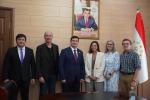
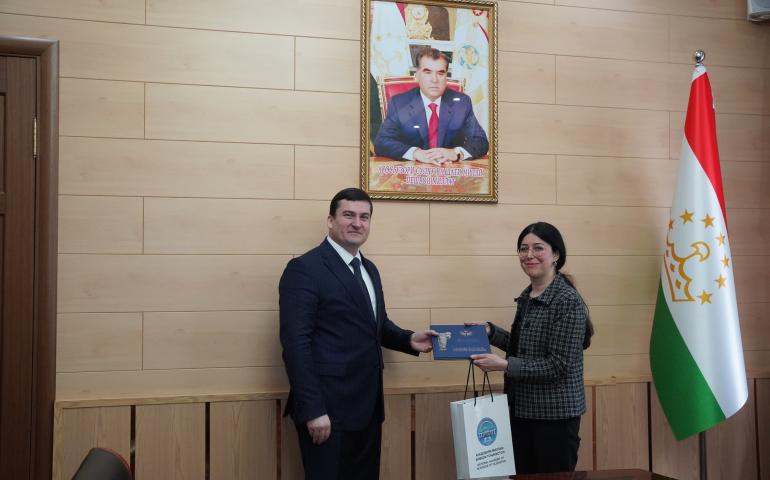
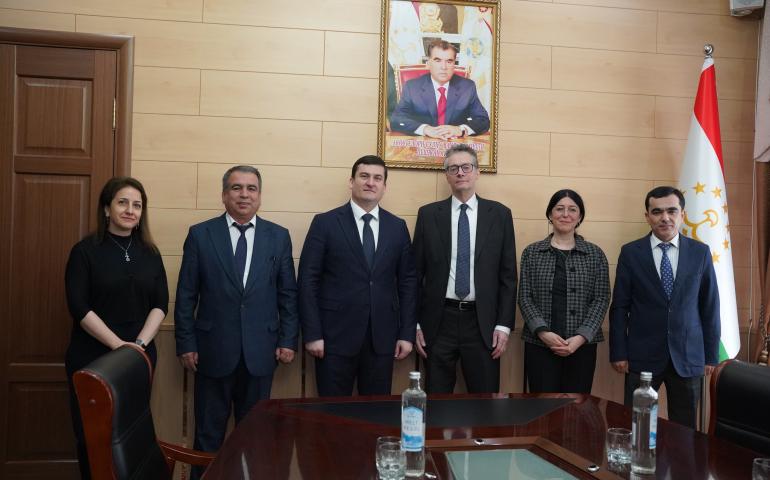
Today, December 17, a meeting was held at the National Academy of Sciences of Tajikistan between the President of the National Academy of Sciences of Tajikistan, Academician Khushvakhtzoda Qobiljon Khushvakht, and development partners from Xi’an Jiaotong University, People’s Republic of China.
The meeting was also attended by Vice President of Xi’an Jiaotong University Bie Chaohun, Executive Vice President of the Research Institute Shao Jingyu, Director of the International Center for New Technology Transfer Wang Wen, Deputy Director of the International Office Meng Xiangli, as well as the President’s Advisor and Head of the Department of International Scientific Relations of the National Academy of Sciences of Tajikistan.
During the meeting, the parties discussed issues related to the implementation of the planned activities for the construction of the buildings of the Scientific Center for Information Technology and the dormitory to implement the joint program for training scientific personnel (Master’s and PhD).
In addition, the meeting addressed the expansion of cooperation in the field of international scientific projects and their joint implementation with the participation of scientists and researchers from Xi’an Jiaotong University, People’s Republic of China.
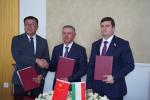
In this regard, the university representatives expressed their full readiness to cooperate with the President of the National Academy of Sciences of Tajikistan, Academician Khushvakhtzoda Qobiljon Khushvakht. On the sidelines of the visit, based on the agreement between the National Academy of Sciences and Xi’an Jiaotong University, the Xi’an–Tajikistan International Center for New Technology Transfer was inaugurated.
At the same time, the university representatives visited the selected site for the construction of the Scientific Center for Information Technology and the dormitory and commenced construction works on these facilities.
COMMISSIONING OF THE JOINT LABORATORY ON ENVIRONMENTAL MONITORING AND BIG DATA UTILIZATION
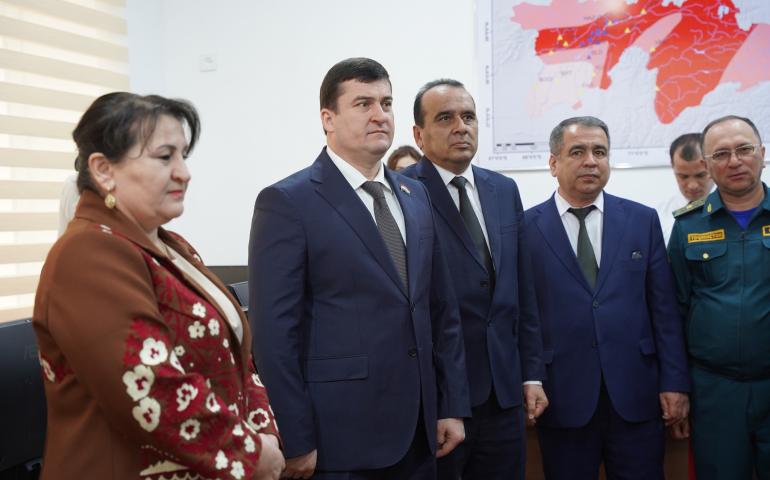
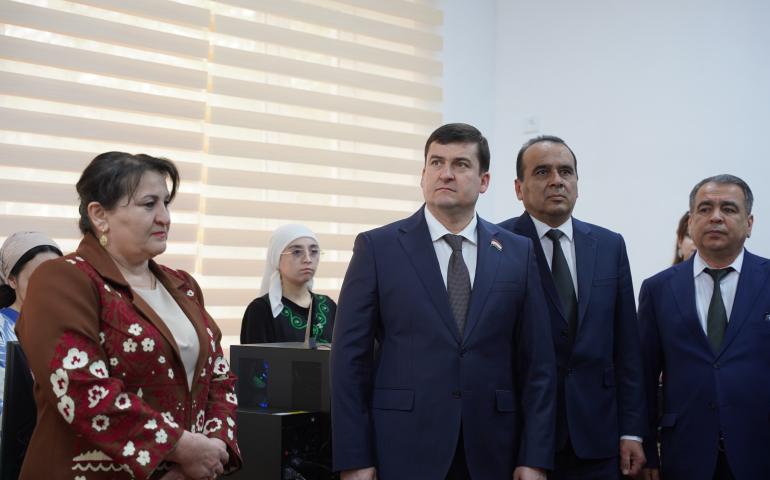
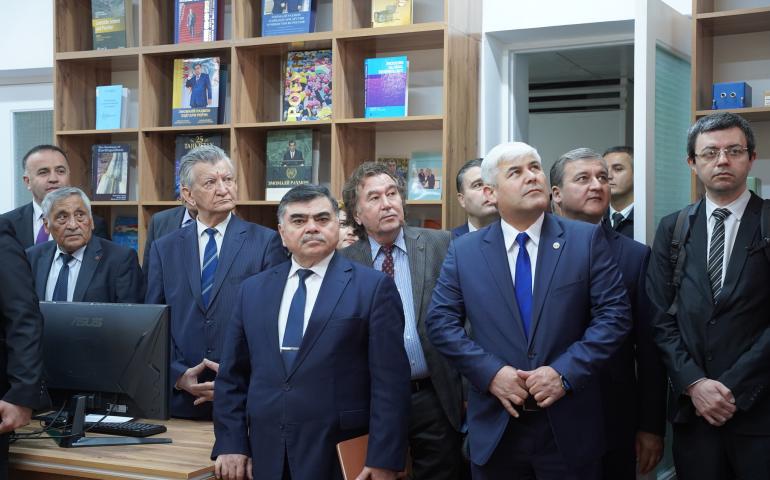
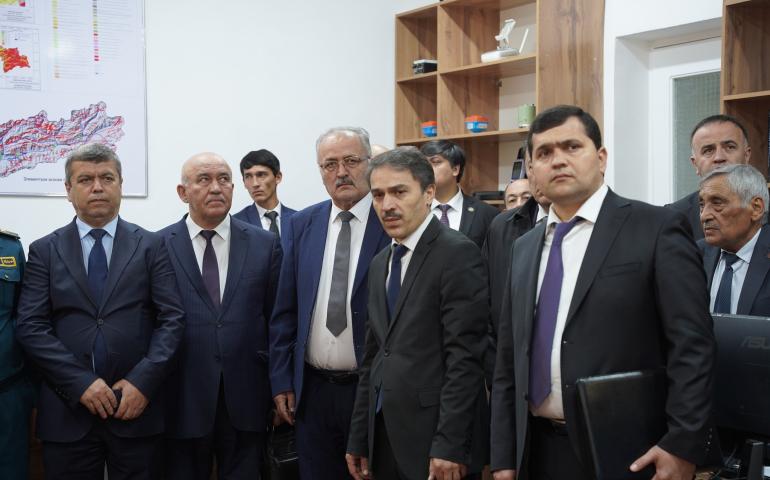
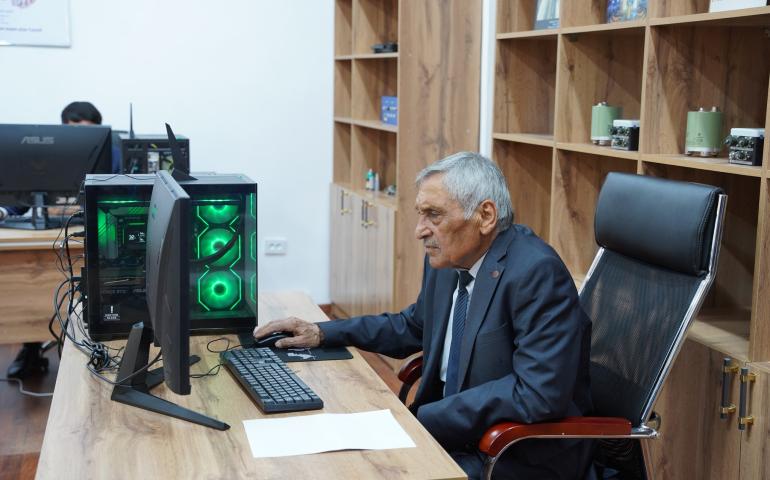
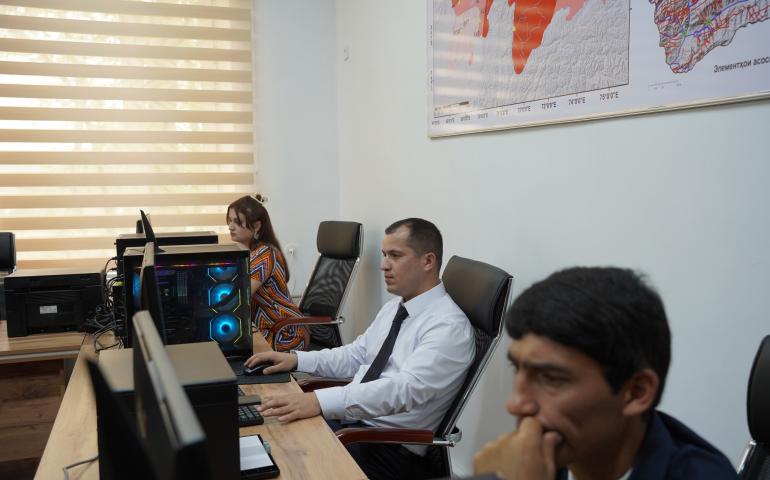
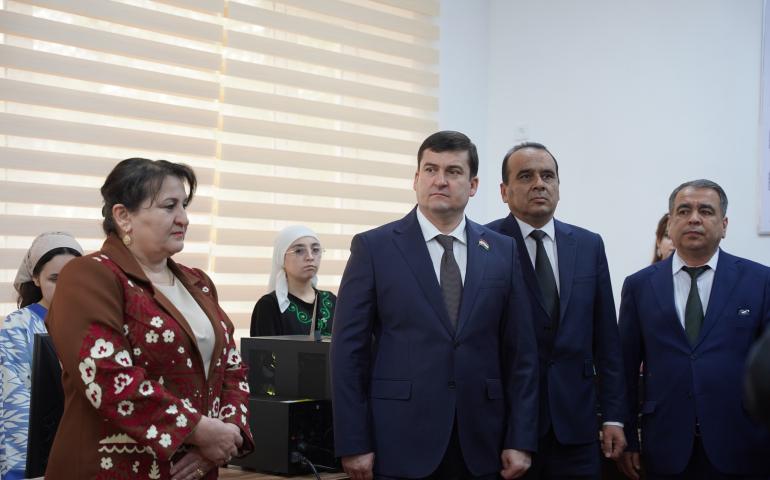
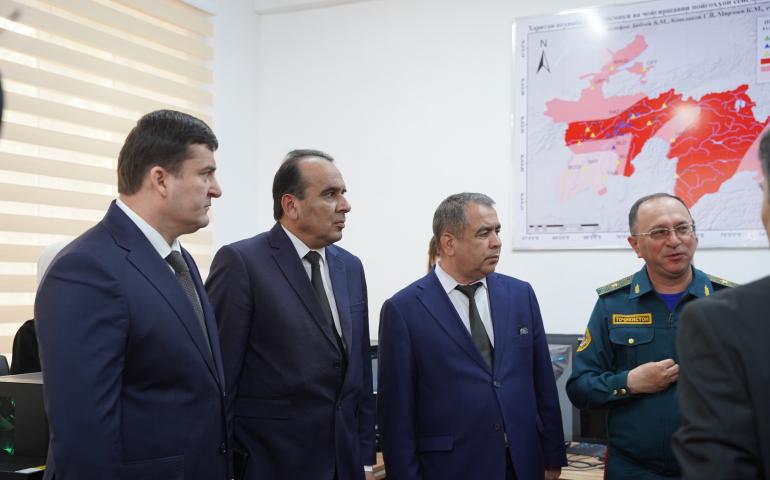
Today, December 10, at the Institute of Water Problems, Hydropower, and Ecology of the Academy of Sciences of Tajikistan, with the participation of the President of the Academy of Sciences of Tajikistan, Academician Khushvakhtzoda Kobiljon Khushvakht, representatives of the Ministry of Transport of the People’s Republic of China, the Ministry of Ecology and Environment of China, and the company Hebei Sailhero Environmental Protection, the joint laboratory on environmental monitoring and big data utilization, equipped with modern technologies, was officially commissioned.
During the opening, it was noted that the advanced equipment installed in the laboratory as part of the joint cooperation and with the support of the Ministry of Transport of the PRC, the Ministry of Ecology and Environment of China, and Hebei Sailhero Environmental Protection is intended for environmental monitoring, quality analysis, and efficient use of natural resources.
The laboratory provides opportunities for scientists from Tajikistan and China to expand scientific collaboration and joint research in the fields of ecology and energy, exchange knowledge and experience, and conduct research at the international level using advanced technologies.
The inauguration of the joint laboratory is an important step in strengthening scientific and technological cooperation between Tajikistan and China, opening wide prospects for sustainable environmental development and scientific progress in both countries. It should be noted that this equipment has been introduced to Tajikistan for the first time, creating new opportunities for advanced environmental research and big data utilization.
The laboratory is equipped with modern and advanced instruments, including a multiparameter water quality analyzer, a portable multiparameter water quality meter P-MP1000, and a networked air quality monitor XHAQSN-822. This equipment is used for environmental monitoring, collection of ecological data, and implementation of joint scientific and technological research.
CEREMONY FOR PRESENTING THE ACHIEVEMENTS OF THE FIRST PHASE OF INTERGOVERNMENTAL SCIENTIFIC AND TECHNOLOGICAL COOPERATION BETWEEN CHINA AND TAJIKISTAN
Today, December 10, at the Institute of Water Problems, Hydropower, and Ecology of the Academy of Sciences of Tajikistan, with the participation of the President of the Academy of Sciences of Tajikistan, Academician Khushvakhtzoda Kobiljon Khushvakht, representatives of the Ministry of Transport of the People’s Republic of China, the Ministry of Ecology and Environment of China, and the company Hebei Sailhero Environmental Protection, a ceremony was held to present the achievements of the first phase of intergovernmental scientific and technological cooperation between China and Tajikistan.
In his opening remarks, the President of the Academy of Sciences of Tajikistan, Academician Khushvakhtzoda Kobiljon Khushvakht, warmly welcomed the guests and noted that for more than three decades, following the restoration of diplomatic relations, friendly ties and constructive cooperation between our countries have been steadily strengthening. Today, this cooperation spans the economy, infrastructure, education, science, and technology, reaching a qualitatively new level.
It was emphasized that intergovernmental scientific and technological cooperation is one of the key directions of bilateral relations. This constructive cooperation, implemented through official mechanisms, contributes to the development of scientific integration, the introduction of modern technologies, and the strengthening of the scientific potential of both Tajikistan and China.
It was also noted that in the context of rapid climate change, global competition, and challenges in food and energy security, countries capable of effectively applying scientific knowledge and innovation gain a strategic advantage. For Tajikistan, intergovernmental scientific and technological cooperation with China serves as a powerful tool to achieve these goals. It enables the enhancement of the country’s scientific and technical potential, access to advanced technologies and laboratory infrastructure, development of human resources and scientific competencies, strengthening the state’s capacity to respond to climate and natural challenges, and support for strategic sectors, including water resources, ecology, agriculture, energy, and biodiversity. All of these make cooperation not only beneficial but essential for the sustainable development of the country.
Following this, representatives of the Ministry of Transport of the PRC and the Ministry of Ecology and Environment of China delivered detailed presentations on the results of the first phase of cooperation. They highlighted practical achievements, including the establishment of new laboratories, implementation of advanced technologies, expansion of scientific infrastructure, and introduction of new methods in the fields of ecology and hydropower. In addition, they outlined opportunities for future cooperation in scientific and technological areas, including human resource development, enhancement of scientific expertise, deployment of innovative equipment, and expansion of joint research for sustainable economic and environmental development.
These presentations demonstrated that the cooperation between the two countries has not only produced tangible results but also opens wide prospects for strengthening scientific integration, adopting modern technologies, and enhancing the scientific potential of both nations.
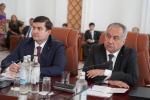
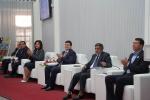
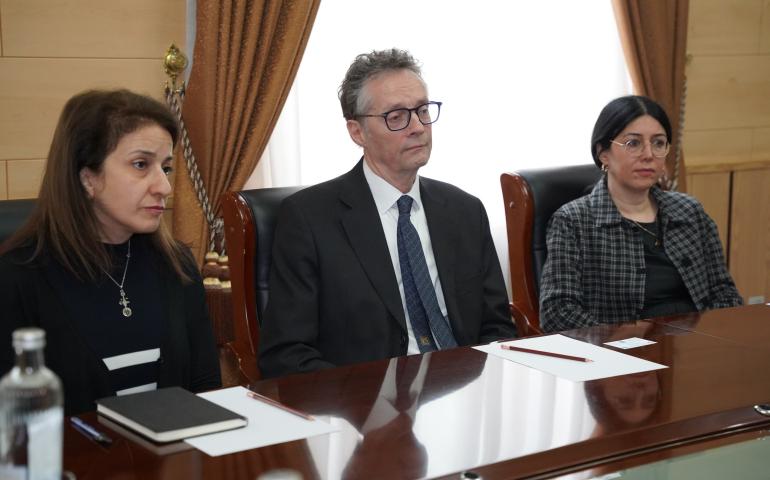
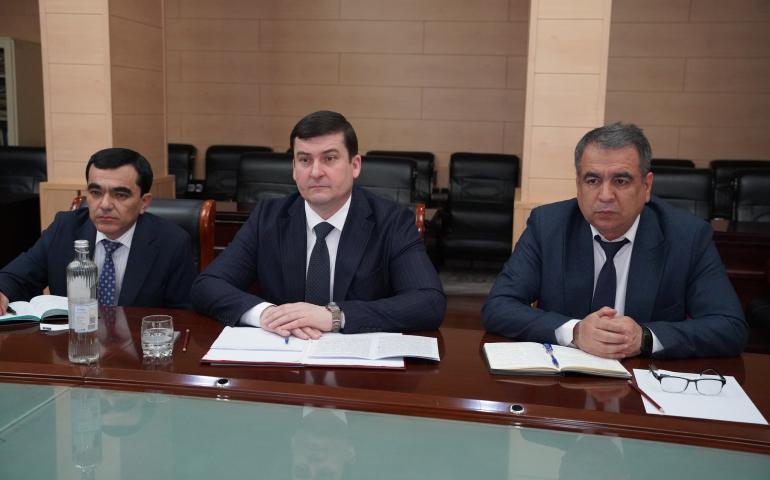
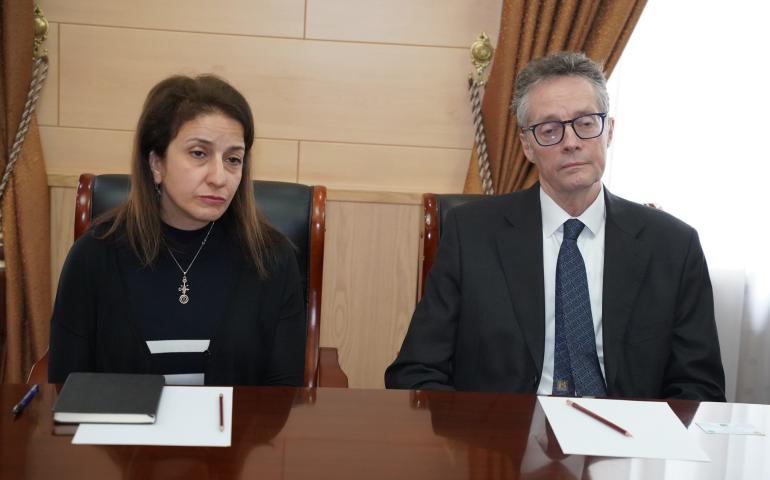
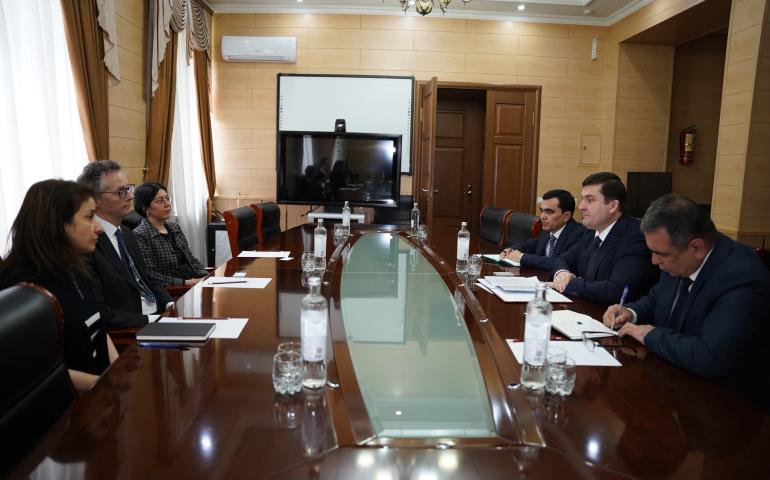
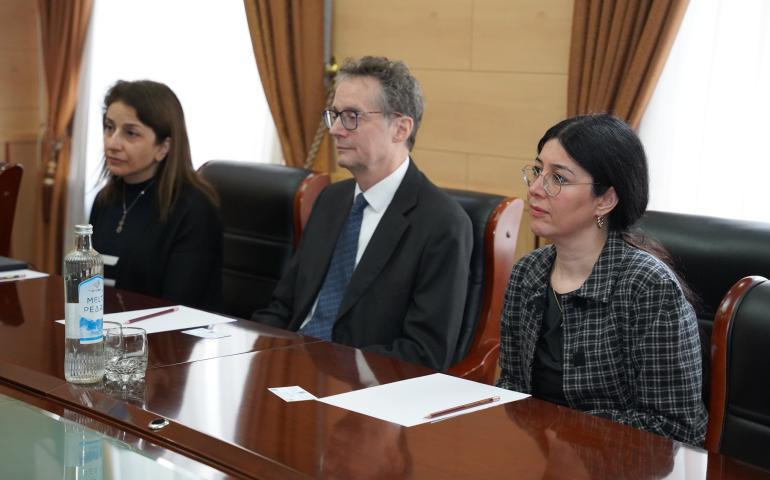
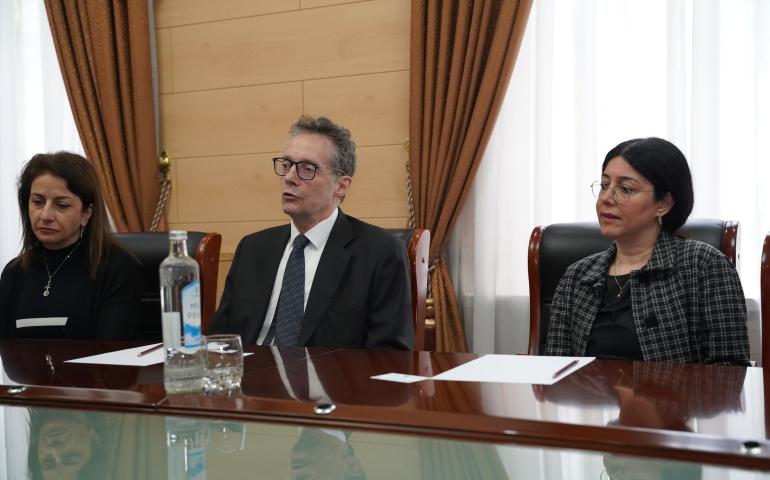
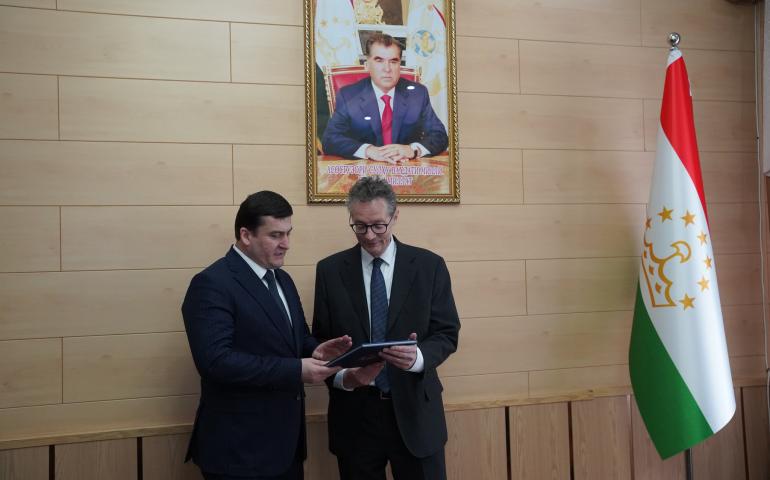
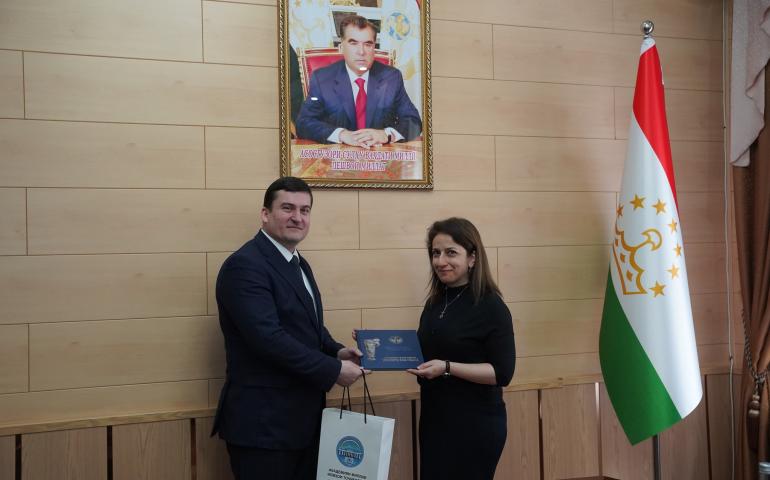
Today, on December 1, the President of the National Academy of Sciences of Tajikistan, Academician Khushvakhtzoda Qobiljon Khushvakht, held a meeting with the Head of the Regional Programme for Central Asia, Andre Algermissen, and the Project Coordinator for Central Asia, Ashraf Alikulov.
During the meeting, the parties exchanged views on strengthening scientific cooperation within the framework of the Regional Programme for Central Asia and emphasized the need to develop effective coordination mechanisms between scientific institutions of the region and international organizations. It was noted that scientific cooperation and the use of the intellectual potential of Central Asian countries are among the key factors in ensuring sustainable regional development.
The President of the National Academy of Sciences of Tajikistan, Academician Khushvakhtzoda Qobiljon Khushvakht, stressed that the National Academy of Sciences of Tajikistan is ready to enhance cooperation in priority scientific areas, including natural sciences, energy, ecology, information technologies, and climate change studies. It was noted that the implementation of joint projects would contribute to strengthening scientific capacity, attracting qualified specialists, and developing the country’s scientific infrastructure.
Further, the Head of the Regional Programme, Andre Algermissen, expressed satisfaction with cooperation with the Republic of Tajikistan and emphasized that within its mandate, the Programme is ready to provide comprehensive support for new scientific and innovative initiatives, the organization of training programmes, human capacity development, and the expansion of regional scientific networks. It was also noted that effective scientific ties can have a positive impact on strengthening regional stability and security, as well as on improving natural resource management mechanisms.
At the conclusion of the meeting, the parties underscored the importance of developing science diplomacy and expressed their readiness to elaborate specific cooperation plans, hold joint conferences and seminars, and expand relations with international organizations.
VISIT OF THE PRESIDENT OF THE ACADEMY OF SCIENCES TO THE GREENHOUSE FOR GROWING LEMONS AND OTHER SUBTROPICAL FRUITS AT THE EXPERIMENTAL FIELDS OF THE INSTITUTE OF BOTANY
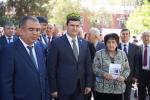
Today, on 25 November, the President of the National Academy of Sciences of Tajikistan, Academician Khushvakhtzoda Qobiljon Khushvakht, visited the greenhouse for growing lemons and other subtropical fruits on the experimental fields of the Institute of Botany, Physiology and Plant Genetics of the National Academy of Sciences of Tajikistan.
It was reported that on the experimental plots of the Institute of Botany, Physiology and Plant Genetics, considering the establishment of a collection orchard of subtropical plants, a mother orchard and the future expansion of nurseries of mandarin and orange varieties, research experiments are being conducted on seedlings propagated by cuttings — Meyer lemon, ponderosa, grapefruit, lime, avocado, mango, feijoa, chayote (Mexican cucumber), passion fruit, momordica, papaya (melon tree) and olive. The purpose of these studies is to increase the productivity of these crops and develop scientifically based recommendations for their introduction into production.
It was emphasized that in the experimental zone, in order to study the productivity of dwarf apple trees in intensive orchards, apple trees grafted on dwarf rootstocks have been planted, and phenological observations and scientific research are being carried out. Various kiwi varieties have also been planted in the experimental area to establish kiwi cultivation in the future under the climatic conditions of Tajikistan; methods of cultivation and propagation are being studied.
During the visit, it was noted that citrus plants represent a large group of evergreen fruit trees belonging to the genus Citrus, which is part of the subfamily Aurantioideae of the family Rutaceae. In Tajikistan, citrus plants have been grown in trenches and lemon houses since the 1930s. The climatic conditions of the Khatlon and Sughd regions, Hisor valley, Lower Kofarnihon valley, Panj river valley, and the valleys of the Surkhob and Yakhsu rivers, as well as central districts, are particularly suitable for their cultivation.
It was also stated that chayote — the Mexican cucumber (Sechium edule L.) - is a perennial climbing plant. Its fruits have been used as food by American Indians since ancient times. Chayote was first brought to Tajikistan by researchers of the Institute of Botany, Physiology and Plant Genetics of the Academy of Sciences from the Krasnodar region of Russia and was included in scientific studies. The methods of chayote propagation, cultivation techniques and fruit quality are being comprehensively studied. Chayote fruit contains oils, proteins, sugar, starch, carotene, mineral substances — potassium, magnesium, iron, phosphorus, vitamins C, B1, B2, PP, as well as proteins containing 19 amino acids, eight of which are essential.
It was reported that passion fruit (marakuya) is a tropical fruit belonging to the group of climbing plants. It has a brightly colored and attractive flower. The fruit is oval, 8–10 cm long. Although the outer appearance of the fruit may seem unattractive, the inside is bright yellow, aromatic and delicious. Due to its rich biochemical composition, passion fruit has high nutritional and medicinal value. The fruit contains 25–40% juice. Passion fruit juice contains provitamin A, vitamins C, B2, B3, B6, B9, microelements K, Fe, Mg, P, and also 73% water, 22% carbohydrates, 2% protein, and 0.7% fat.
In addition, momordica (Momordica) is a tropical climbing plant. The cultivation of momordica on the experimental plots of the Institute of Botany, Physiology and Plant Genetics is the first study of this plant under the conditions of Tajikistan. The plant grows 2.5–3 meters in a season and bears fruit in the same year. The fruit grows up to 10–15 cm. Due to its rich biochemical composition, momordica has significant nutritional and medicinal value. It is used to treat hypertension, hemorrhoids, gastric ulcer, diabetes, leukemia, reduce blood cholesterol levels, strengthen immunity, reduce weight, and оthers.
PRESIDENT OF THE NATIONAL ACADEMY OF SCIENCES OF TAJIKISTAN ELECTED VICE PRESIDENT AND ACADEMICIAN OF THE ASIAN ACADEMY OF SCIENCES
During the First General Assembly of the Asian Academy of Sciences (AASc), held in Hong Kong of the People’s Republic of China, the President of the National Academy of Sciences of Tajikistan, Academician Khushvakhtzoda Qobiljon Khushvakht, was elected Vice President and Academician of the Asian Academy of Sciences.
This historic election stands as evidence of the global recognition of the significant contribution and scientific authority of Tajik scholars in the advancement of science and international research. It also reflects that Tajikistan is acknowledged in the scientific space of Asia and the world as a country with a strong scientific foundation and highly qualified scholars.
The election of the President of the National Academy of Sciences of Tajikistan, Academician Khushvakhtzoda Qobiljon Khushvakht, to a leadership position in the Asian Academy of Sciences opens new opportunities for expanding scientific cooperation between Tajikistan and Asian countries, as well as for implementing joint research programs and strategic scientific initiatives.
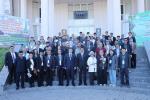
It should be noted that the General Assembly was attended by 121 delegates from various countries, including China, Russia (with representatives from the Republic of Tatarstan, the Chechen Republic, the Republic of Dagestan, and the Republic of Bashkortostan); India, Japan, Turkey, Azerbaijan, Georgia, Kazakhstan, Tajikistan, Uzbekistan, Kyrgyzstan, Pakistan, as well as non-Asian countries such as the United States, France, Greece, Moldova, and Belarus. A total of 97 delegates took part in the election, selecting the Academy’s leadership as well as full and associate members.
This election is of exceptional importance for the development of a unified scientific space and the integration of Asian scholars, and it represents recognition of the contribution of Tajikistan and its scientists at both regional and international levels.
It is noteworthy that the Asian Academy of Sciences is the only scientific institution established at the regional and international levels to unite Asian scholars, develop scientific research, and expand strategic cooperation among the countries of the Asian continent, bringing together all scientific institutions of the region.
OFFICIAL OPENING OF THE “DECARBONIZED HEATING SYSTEM USING GEOTHERMAL RESOURCES”
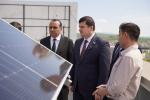
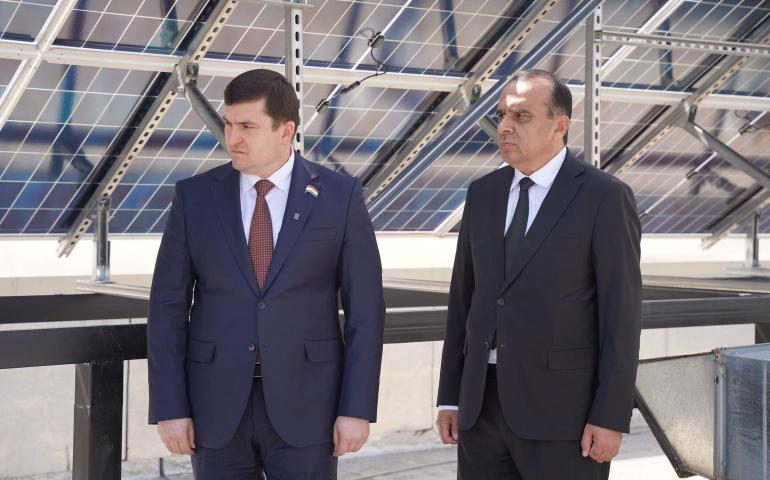
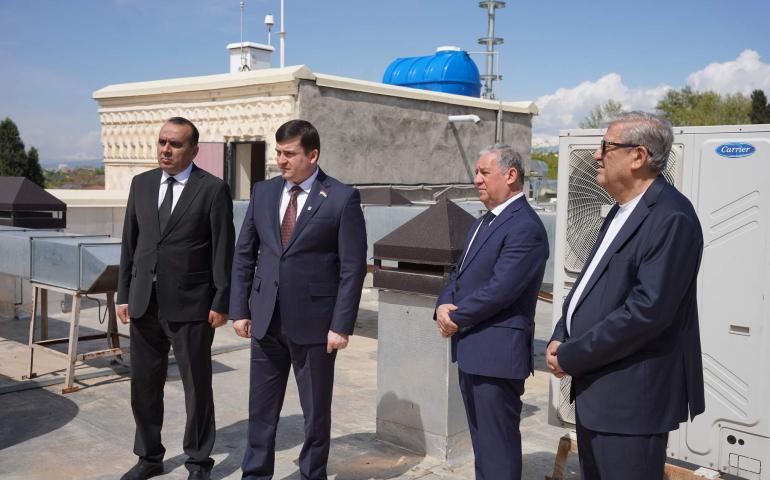
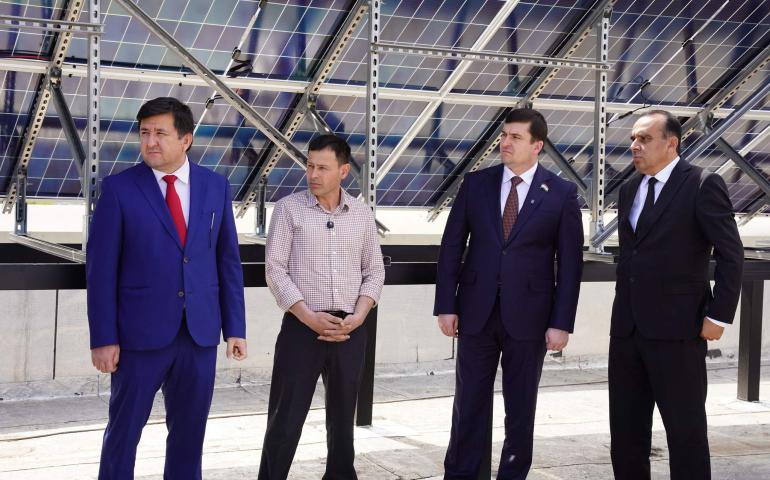
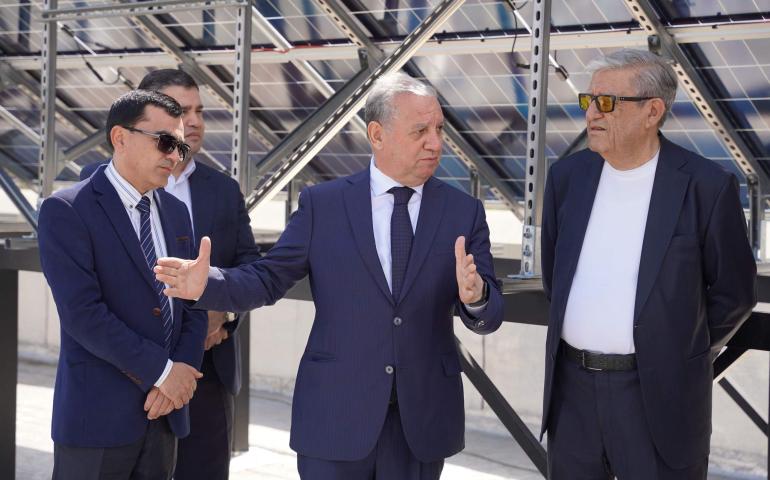
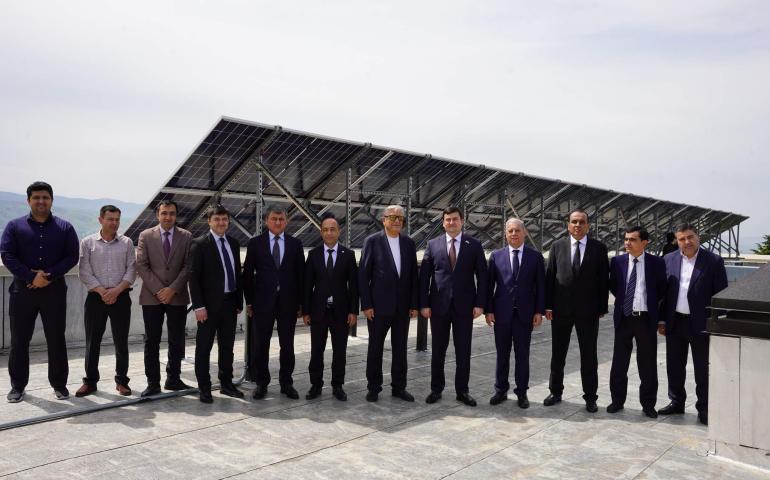
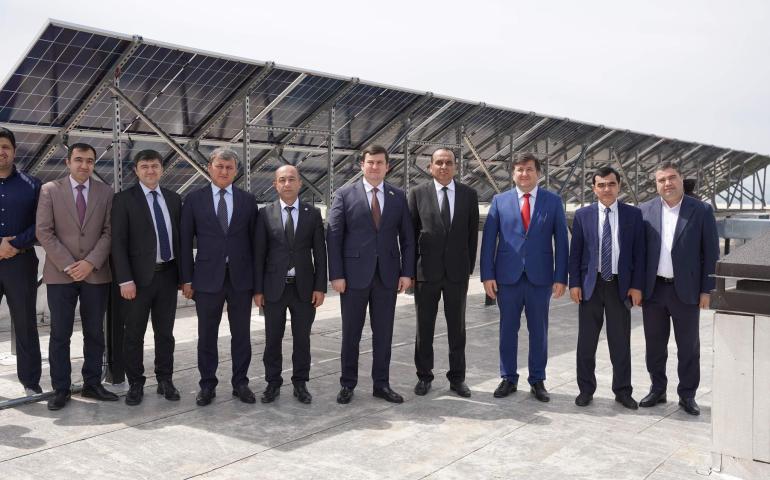
Today, on November 18, the “Decarbonized Heating System Using Geothermal Resources” was officially inaugurated at the Center for Innovation Development of Science and Digital Technologies of the National Academy of Sciences of Tajikistan.
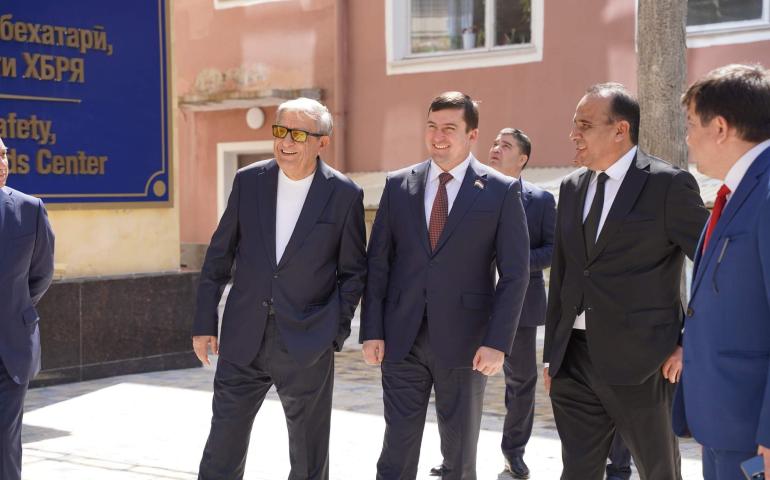
The opening ceremony was attended by the President of the National Academy of Sciences of Tajikistan, Academician Khushvakhtzoda Qobiljon Khushvakht, the Ambassador Extraordinary and Plenipotentiary of Japan to Tajikistan Ms. Keiko Furuta, the representative of the Ministry of Foreign Affairs of the Republic of Tajikistan Mr. Mirzosharif Jalolov, Head of the JICA Office, Mr. Seiju Imai, and representatives of various ministries and agencies of Tajikistan.
As part of the project, an “Ion Chromatography Analyzer” was installed and young researchers received full training. During the opening ceremony, the device was presented by the senior researcher of the Center, Farzona Najmiddinova.
It should be noted that the implementation of the project “Improving the Decarbonized Heating System Using Geothermal Resources” is of great importance, as it helps address a number of key energy, environmental, and social challenges in Tajikistan.
Providing heating in mountainous climates and harsh winters, especially in remote areas, remains one of the pressing issues. Currently, most households, educational institutions, and medical facilities rely on coal, firewood, or liquefied gas, which requires significant expenses and causes environmental pollution due to CO₂ and other emissions.
Using geothermal energy through Ground Source Heat Pump (GSHP) systems makes it possible to reduce heating costs and minimize carbon emissions. The technology operates using stable underground temperatures and can function efficiently year-round.
The application of such technologies not only reduces the use of conventional fuels but also represents a transition to clean and renewable energy sources. At the same time, it improves local energy independence, reduces consumer expenses, and contributes to environmental protection.
Artificial intelligence has also been effectively integrated into this system. Digital systems powered by AI continuously analyze data from sensors—such as underground temperature, heating demand, and climate conditions—allowing for automatic optimization, reduced energy consumption, and improved stability of the entire network.
AI capabilities also support heating load forecasting, intelligent indoor energy management, and cost reduction. As a result, the system becomes not only environmentally friendly and cost-efficient, but an advanced intelligent infrastructure.
Given Tajikistan’s considerable geothermal potential and favorable climate conditions, the integration of GSHP technology and artificial intelligence can become a progressive technological model for other regions and significantly contribute to national strategies for sustainable development, efficient resource use, and climate adaptation.
MEETING WITHIN THE PROJECT ON IMPROVING THE DECARBONIZED HEATING SYSTEM USING GEOTHERMAL RESOURCES
Today, on November 18, a meeting was held at the Center for Innovative Science and Digital Technologies of the Academy of Sciences of Tajikistan within the framework of the project “Improving the Decarbonized Heating System Using Geothermal Resources.”
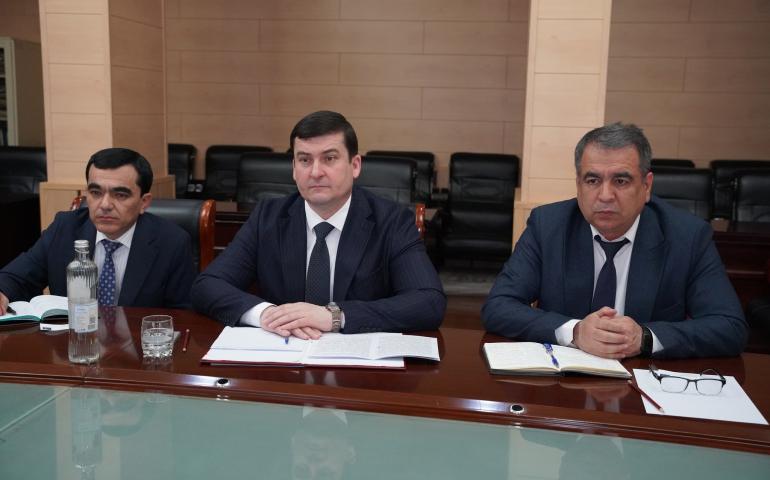
The meeting was attended by the President of the National Academy of Sciences of Tajikistan, Academician Khushvakhtzoda Qobiljon Khushvakht, the Extraordinary and Plenipotentiary Ambassador of Japan to Tajikistan, Ms. Furuta Keiko, a representative of the Ministry of Foreign Affairs of the Republic of Tajikistan, as well as scientists and researchers from Tajikistan and Japan.
The President of the National Academy of Sciences of Tajikistan, Academician Khushvakhtzoda Qobiljon Khushvakht, stated in his speech that with the support of Akita University (Japan), the implementation of this project at the Center for Innovative Science and Digital Technologies of the Academy of Sciences of Tajikistan will enable the development of modern decarbonized heating technology in the country and the efficient use of geothermal resources.
It was noted that today we gathered within the framework of the opening of the geothermal house dedicated to the iTAG-SATREPS project — “Improving the Decarbonized Heating System Using Geothermal Resources.” This project is implemented with the support of the international program “Science and Technology Research Partnership for Sustainable Development” (SATREPS), Akita University (Japan), and the Japan International Cooperation Agency (JICA) at the Center for Innovative Science and Digital Technologies of the Academy of Sciences of Tajikistan.
It was emphasized that the implementation of the project will allow the country’s heating system to be modernized using advanced methods, and at the same time, provide a solid foundation for training highly qualified national specialists. The use of geothermal heat is considered one of the priority areas for the development of green energy in the country.
Furthermore, the Extraordinary and Plenipotentiary Ambassador of Japan to Tajikistan, Ms. Furuta Keiko, stated that bilateral cooperation in green energy and the implementation of modern technologies is of key importance for the sustainable development of Tajikistan, and the implementation of the decarbonized heating project is a clear example of such cooperation.
At the end of the meeting, participants exchanged views on effective project implementation, attracting international investors, and expanding scientific and practical cooperation.