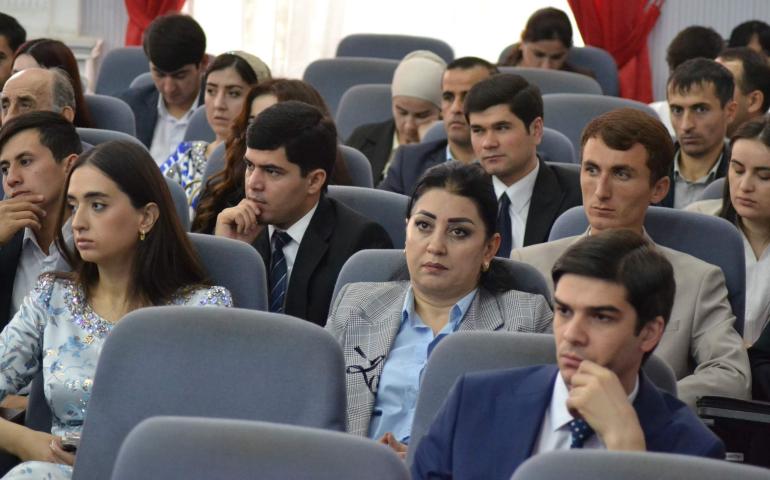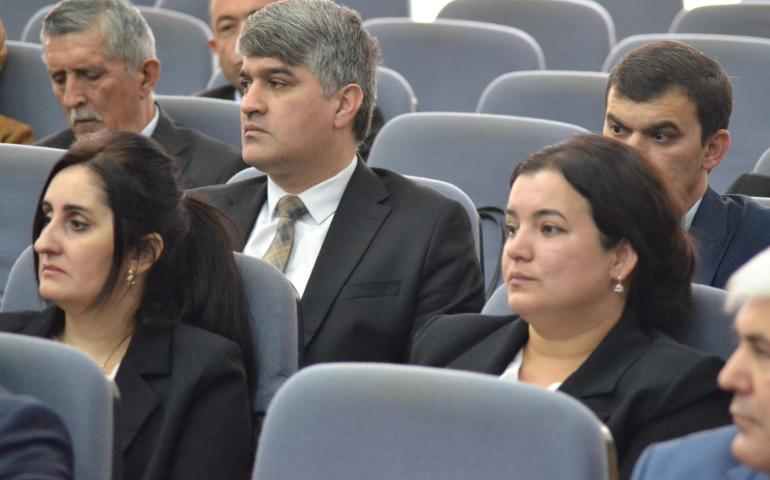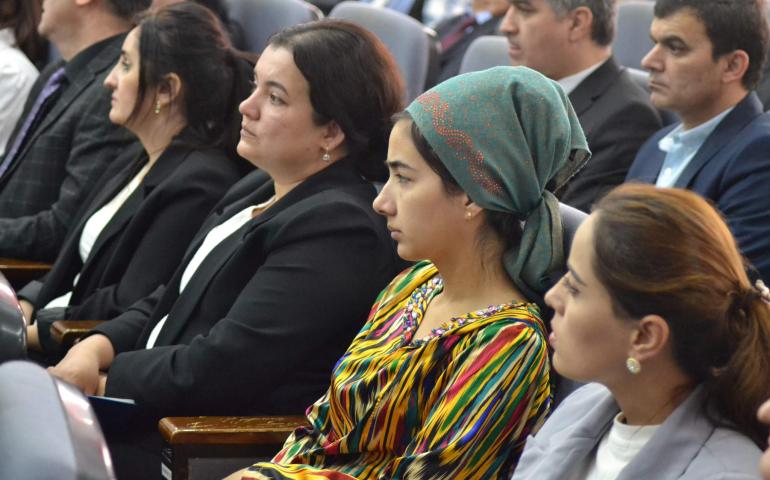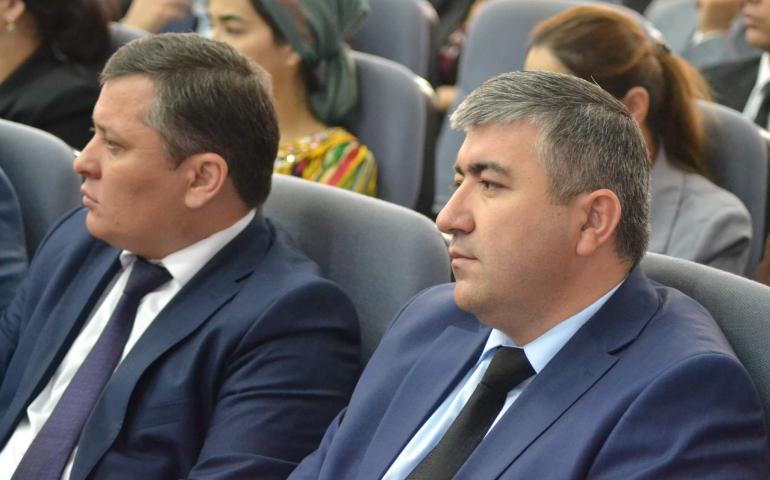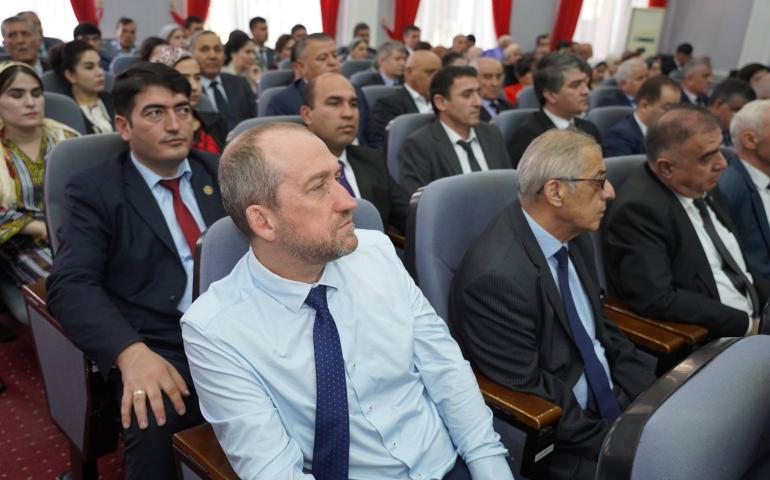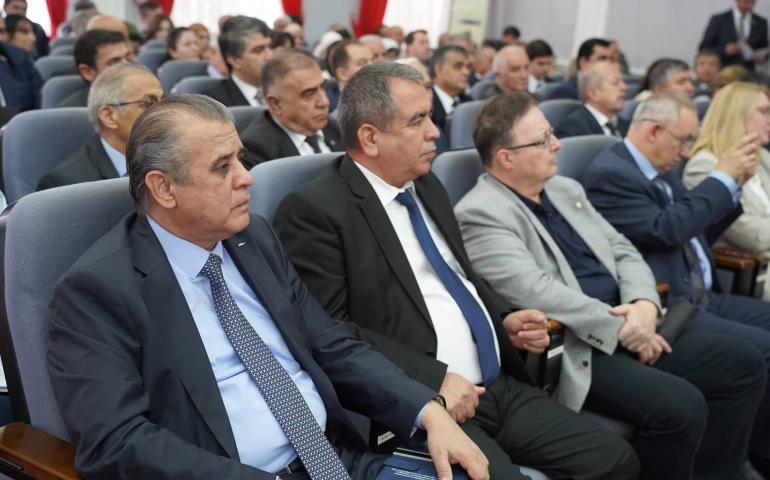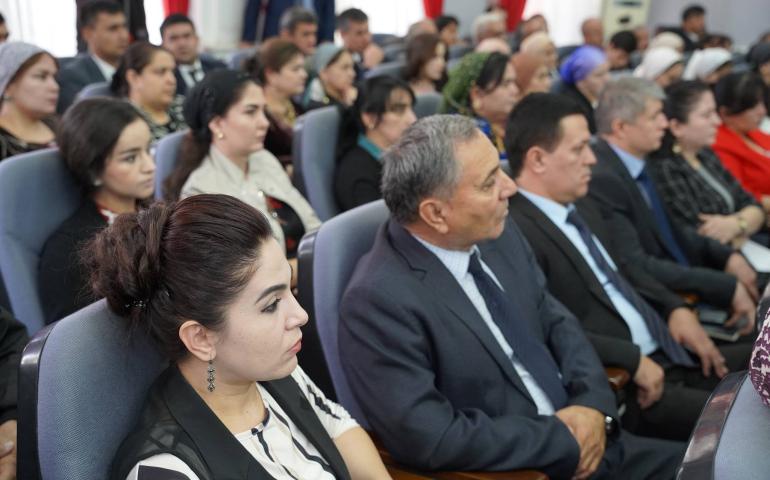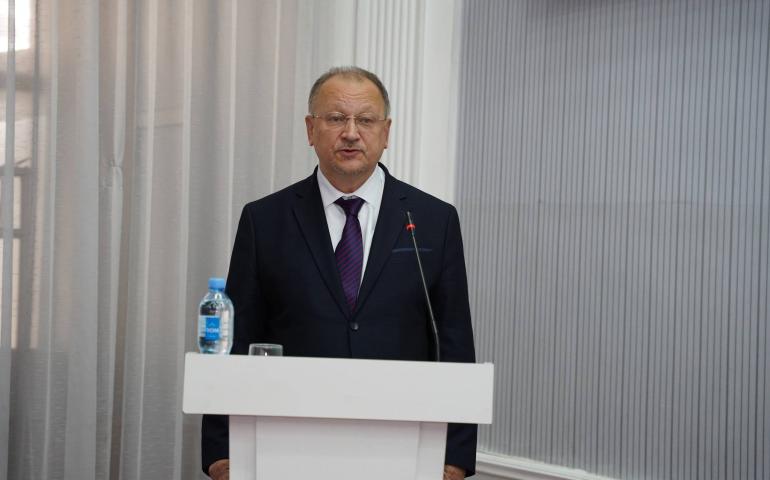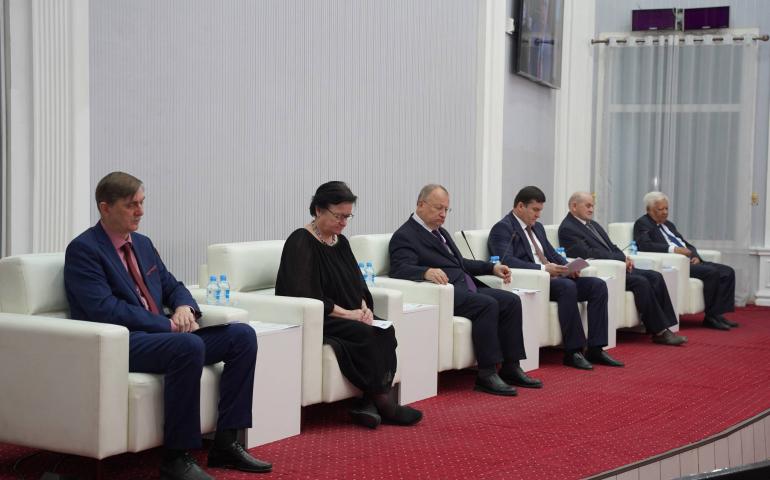

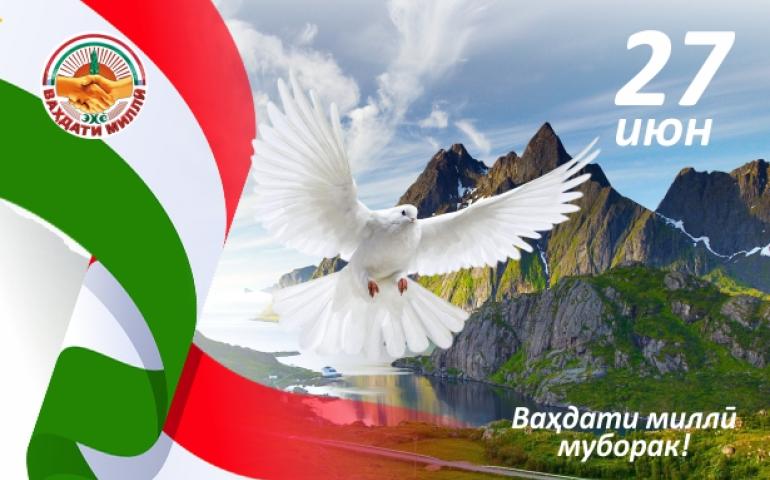
Моҳияти вожаи “ваҳдат”, ба маънои пойдорӣ ва таҳкими ҷомеа далолат мекунад. Пас ҳамчун истилоҳ, мафҳуми «ваҳдати миллӣ» ҷомеаи имрӯзаи мо аз он иборат аст, ки он танҳо ба намояндагони як миллат ё тоҷиконе, ки дар ҳудуди Тоҷикистон зиндагӣ мекунанд тааллуқ надошта, балки ваҳдат ва ҳамгироии кулли мардуми кишвар дар назар аст, яъне он ба тоҷикистониён тааллуқ дорад. Пас, ваҳдати миллӣ, ин ваҳдати тамоми шаҳрвандони Тоҷикистон мебошад. Аз ин рӯ, дар таркиби ибораи «ваҳдати миллӣ», калимаи «миллӣ» аз нигоҳи сиёсӣ «шаҳрвандӣ»-ро мефаҳмонад, ки тааллуқ доштан ба кишвари хос аст. Ҳамчунин мо дар илмҳои ҷомеашиносӣ ва ҳам дар таҷрибаи давлатдориамон мафҳумҳои «манфиатҳои миллӣ», «истиқлолияти миллӣ», «амнияти миллӣ», «идеяи миллӣ», «пули миллӣ», «сарвати миллӣ» барин ибораҳои монандро истифода мебарем. Ҳамаи ин истиллоҳҳо умумияти хос дошта, ба кишвар ва сарзамини муайян тааллуқ доштани онҳоро мефаҳмонад, ки дар ин маврид истилоҳи «ваҳдати миллӣ» айни ҳамин тавзеҳ мебошад.
Пас истифодаи мафҳуми ваҳдати миллӣ («национальное согласие» -русӣ; «national consensus»-англисӣ) дар илмҳои ҷомеашиносии муосир аз чанд нуқтаи назар иборат мебошад:
Пеш аз ҳама, «ваҳдати миллӣ» ҳамчун истилоҳи илмҳои ҷомеашиносӣ воситаи ба танзим даровардани ҳалли низоъҳо ва масъалаҳои ихтилофангезе мебошад, ки дар ин ва ё он ҷомеа ба вуҷуд меоянд.
Дуввум, ваҳдати миллӣ ҳамзамон натиҷаи дастоварди муайяни сулҳ дар раванди музокирот байни гурўҳҳои даргир мебошад.
Сеюм, дар ҷомеаи муосир, ки тафовутҳои иҷтимоӣ, сиёсӣ, иқтисодӣ ва миллӣ, ки бараъло мушоҳида мешаванд, ваҳдати миллӣ воситаи муҳими ба танзимдароварандаи ин муносибатҳо мебошад.
Ҳамин тариқ, ваҳдати миллӣ раванде аст, ки барои ташаккули ба ҳам омадан ва ба ҳам наздик шудани қишрҳо ва гуруҳҳои иҷтимоии ҷомеа оварда мерасонад, ки он натиҷаи фаъолияти якҷояи афроди ҷомеа мебошад.
Қобили зикр аст,ки ба даст овардани ваҳдати миллӣ бузургтарин ва нодиртарин падидаи иҷтимоӣ дар ҷомеа ба шумор меравад. Чуноне медонем ба даст овардани сулҳ ва ваҳдати миллӣ кори саҳлу осоне набуд. Ваҳдати миллӣ дар натиҷаи саъю талош ва гузашт карданҳои зиёд ба даст омадааст. Чанд нуктаҳо ва омилҳое муҳиме буданд, ки барои ба даст овардани сулҳу ваҳдати миллӣ кумак намудаанд. Махсусан, риоя намудани принсипҳои инсондўстӣ ва эътирофи комили тарафҳо барои сулҳ ҳамчун арзиши муҳим ва олӣ барои аҳли ҷомеа, инчунин эътирофи фикру пешниҳодҳои ҳарду ҷониб дар раванди музокирот ва ташаккули мусолиҳаи сиёсӣ аз ҷумлаи омилҳои асосии ба даст овардани сулҳ ва ваҳдати миллӣ буд.
Ҳамзамон бояд эъитироф намоем, ки ноил гардидан ба ваҳдати миллӣ дастоварди беҳтарин дар ҷомеаи мо ба шумор рафта, барои рушди минбаъдаи кишвар ва таҳкими амниятии ҷомеа нақши муҳим бозидааст. Имрўз датовардҳои бузурги мо дар ҳаёти иҷтимоӣ, сиёсӣ, иқтисодӣ, фарҳангӣ ва соҳаи варзиш маҳз ба шарофати ваҳдати миллӣ мебошад. Ҳанўз Президенти Ҷумҳурии Тоҷикистон муҳтарам Эмомалӣ Раҳмон дар соли 2005 дар паёмашон ба Маҷлиси Олии Ҷумҳурии Тоҷикистон қайд намуда буданд: «Тоҷикистон бо роҳи дуруст равона аст ва асоси онро суботи сиёсӣ, сулҳу оромӣ ва ваҳдати миллӣ ташкил медиҳад».
Чуноне қайд намудем, ваҳдати миллӣ як раванд аст, ки дар марҳалаҳои гуногуни ҳаёти ҷамъиятӣ ташаккул меёбад. Имрўз низ дар ҳоле, ки ҷомеаҳои муосирро хатарҳои гуногун таҳдид мекунанд, ваҳдати миллӣ бояд тақвият ёбад. Ҳар як фарди ҷомеа бояд дар ин раванд саҳм дошта бошад. Рисолати ҳар як фарди солимфикри ҷомеа новобаста аз мақоми иҷтимоӣ ва хидматияш бояд таҳкимбахшандаи ваҳдати миллӣ бошад.
Дар ин раванд бояд маърифати сиёсӣ ва ҳуқуқии шаҳрвандон баланд бардошта шуда, ҳисси худшиносӣ ва ватандўстӣ тақвият дода шавад. Маҳз иттиҳод ва ваҳдат дар атрофи арзишҳои умумии чомеа барои тақвияти ваҳдати миллӣ ва рушди бонизоми он мусоидат менамояд.
Имрӯз моро зарур аст, ки ҳисси ватандӯстиямон, танҳо дар асоси гиромидошти манфиатҳои миллии давлат ва таҳкими ваҳдати миллӣ ташаккул ёбад. Бо назардошт ва дарки воқеии вазъи ноустувори ҷаҳони муосир, моро зарур аст, ки ватандӯстии худро дар мафҳуми давлати соҳибистиқлоли Тоҷикистони ягона - Ватани маҳбуби мо ташаккул ва тақвият диҳем. Ватандӯстии мо ифодакунандани ҳифзи истиқлолияти давлатӣ, ки тамомияти арзии кишвар, эҳтирому арҷгузорӣ ба таърих, фарҳанг, арзишҳои моддиву маънавӣ ва дар маҷмӯъ манфиатҳои миллии кишвар бояд бошад.
Нусратулло Зокирзода, номзади илмҳои фалсафа. Шуъбаи масъалаҳои фалсафии дин.
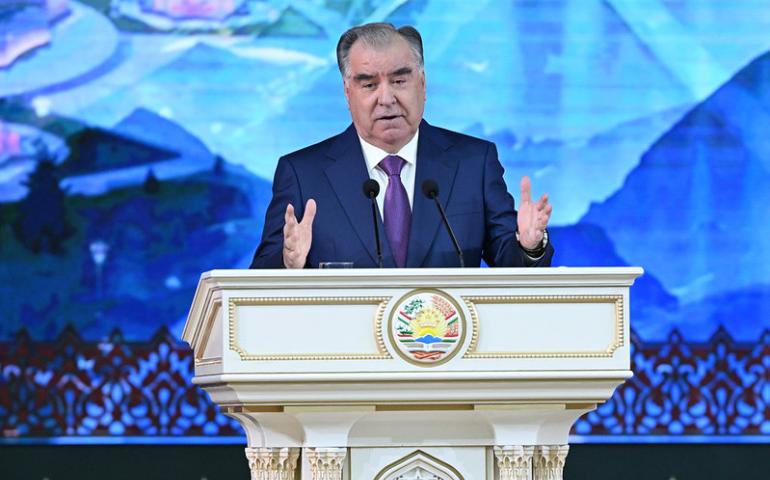
VISIT TO INSPECT THE PROGRESS OF CONSTRUCTION WORKS AT THE BRANCH BUILDING OF THE AGENCY FOR CHEMICAL, BIOLOGICAL, RADIATION AND NUCLEAR SAFETY OF THE NAST IN KHATLON REGION
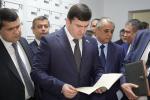
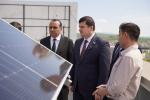
Today, April 25th, the President of the National Academy of Sciences of Tajikistan, Corresponding Member of the NAST Khushvakhtzoda Qobiljon Khushvakht, and the Chairman of Khatlon Region, Davlatali Said, visited the progress of construction works at the branch building of the Agency for Chemical, Biological, Radiation and Nuclear Safety of the National Academy of Sciences of Tajikistan in the city of Bokhtar, Khatlon Region. The construction of this building began in February of this year based on the action plan of the Government of the Republic of Tajikistan and is proceeding according to schedule.
It is recalled that on October 29, 2024, in the academic campus of the National Academy of Sciences of Tajikistan, the Founder of Peace and National Unity – Leader of the Nation, President of the Republic of Tajikistan, His Excellency Emomali Rahmon, and the Chairman of the Majlisi Milli of the Majlisi Oli of the Republic of Tajikistan, Chairman of the city of Dushanbe, His Excellency Rustami Emomali, inaugurated the new building of the Regional Center for Safety, Security and Safeguards in the Field of Chemical, Biological, Radiation and Nuclear Safety of the National Academy of Sciences of Tajikistan.
Also on this day, the project of the branch building of the Agency for Chemical, Biological, Radiation and Nuclear Safety of the National Academy of Sciences of Tajikistan in the city of Bokhtar, Khatlon Region, was presented. During the presentation, it was noted that this building is a complex of 2 and 3-story structures and is planned on an area of 0.12 hectares of land. The building will include the construction of a laboratory, administrative offices for employees in the field of nuclear and radiation safety, an assembly hall, and modern classrooms equipped with modern equipment.
It should be noted that this branch was established taking into account the focus on the declaration of 2020-2040 as the «Twenty Years of Studying and Developing Natural, Exact and Mathematical Sciences in the Field of Science and Education» with the aim of developing scientific and research cooperation between the institutions of Khatlon Region and the National Academy of Sciences of Tajikistan.
The financing of the building's construction is carried out from the budget of the Government of the Republic of Tajikistan, and the internal equipment will be financed by the International Atomic Energy Agency (IAEA). There is also the possibility of conducting practical classes and laboratory work for students majoring in chemistry and biology in modern classrooms.
MEMORANDUM OF UNDERSTANDING BETWEEN THE NATIONAL ACADEMY OF SCIENCES OF TAJIKISTAN AND THE VATICAN APOSTOLIC ARCHIVE AND VATICAN APOSTOLIC LIBRARY
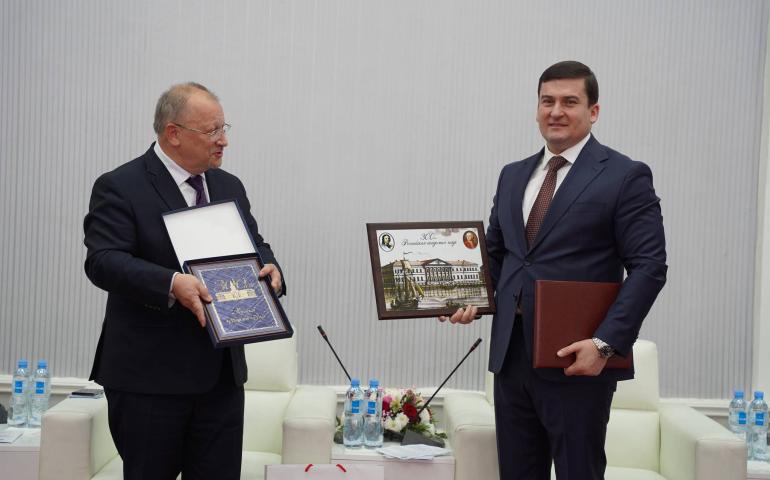
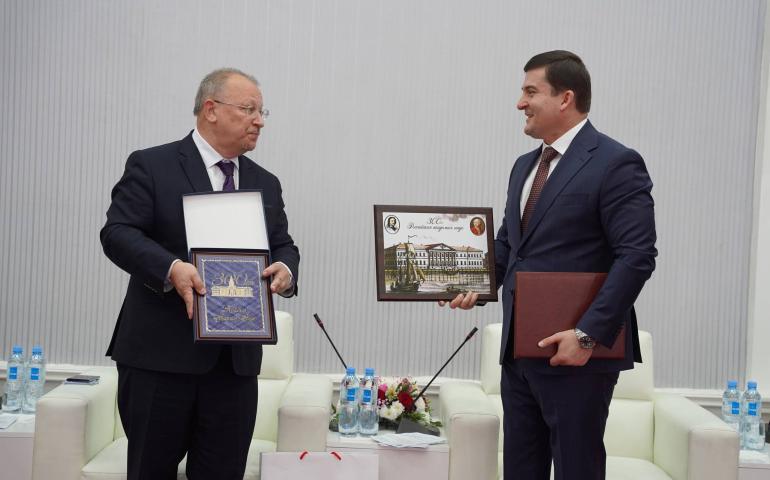
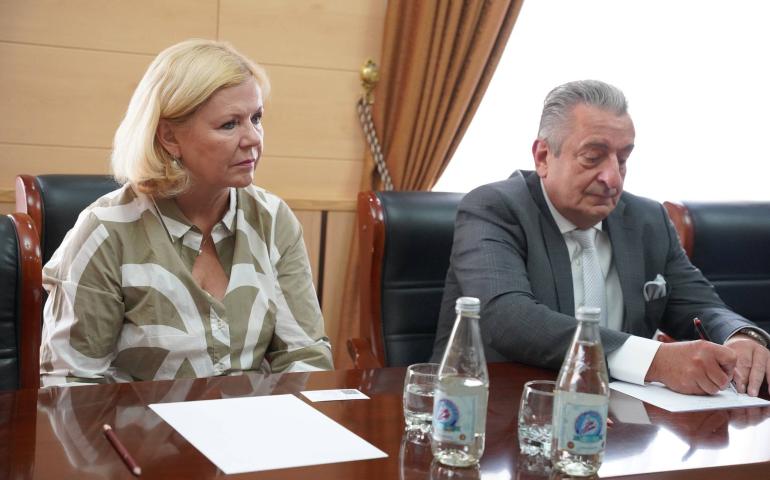
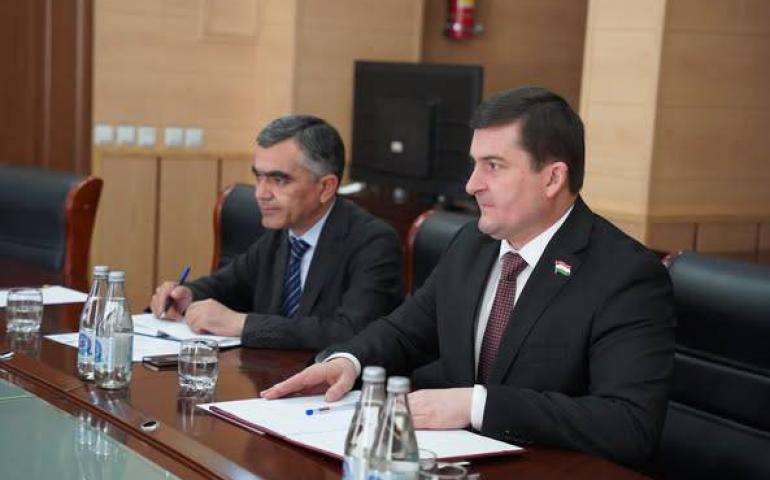
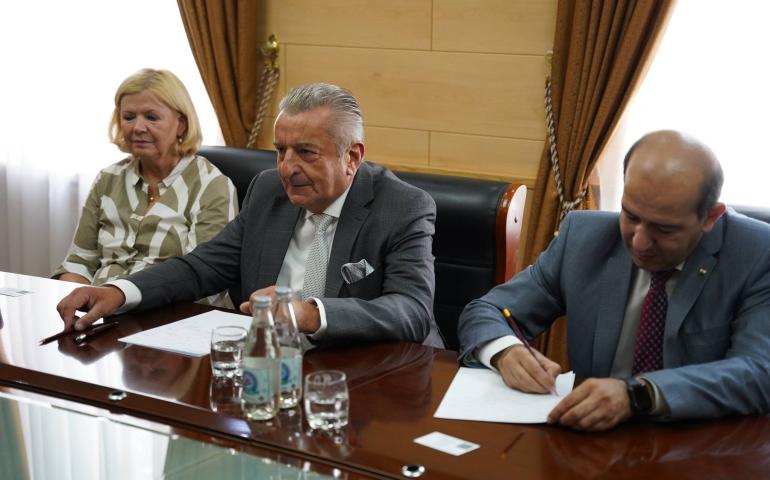
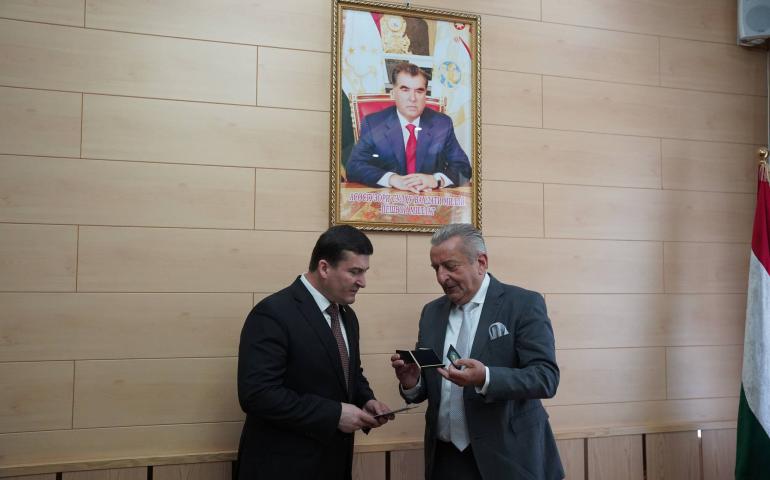
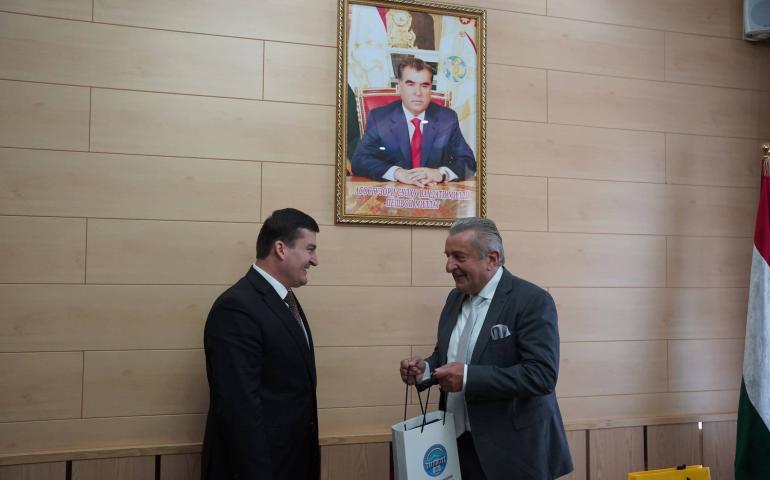
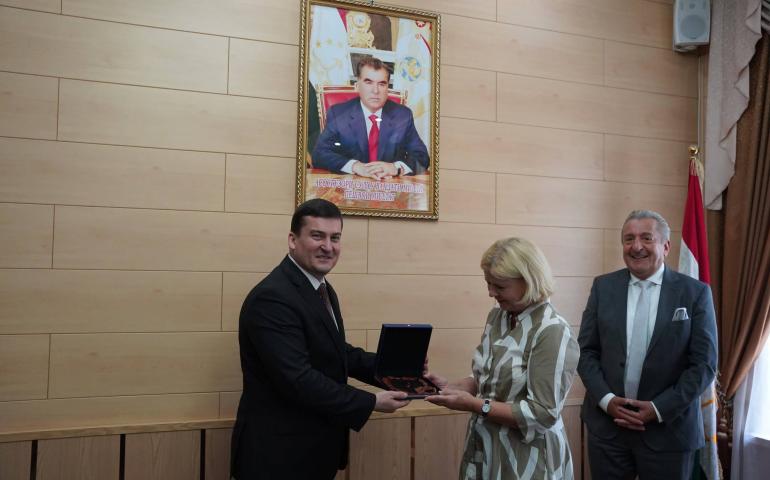
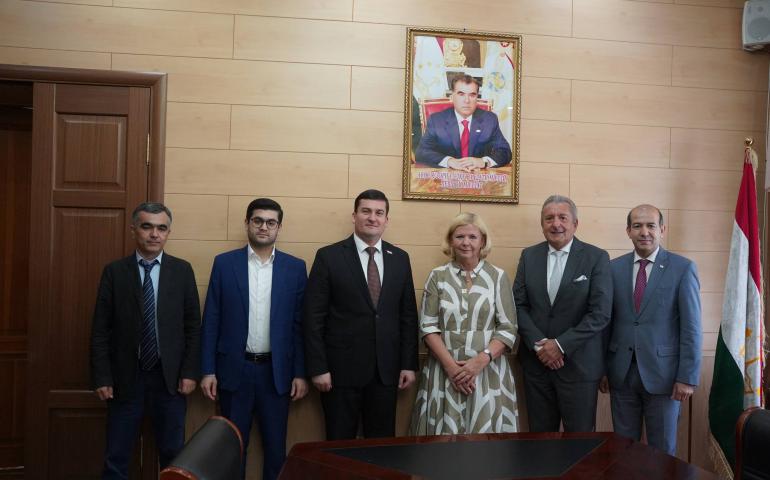
Today, April 23, the President of the National Academy of Sciences of Tajikistan, an associated member of the National Academy of Sciences of Tajikistan, Khushvakhtzoda Qobiljon Khushvakht, met with representatives of the Vatican Apostolic Archives and the Vatican Apostolic Library.
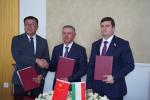
During the meeting, the parties signed a Memorandum of Understanding between the National Academy of Sciences of Tajikistan and the Vatican Apostolic Archives and the Vatican Apostolic Library, which will further study the historical and cultural heritage of the Republic of Tajikistan, preserved in the collections of the Holy See.
During the meeting, it was noted that the Vatican Apostolic Archives, which contain invaluable documents related to the government of the universal Church, and the Vatican Apostolic Library, which preserves a rich heritage of scientific and artistic books, will be placed at the disposal of Tajik scientists and researchers to conduct scientific research and education in this area.
Mentioned, that the Vatican Apostolic Archives and the Vatican Apostolic Library, within the framework of this memorandum of understanding, will strive to assist the National Academy of Sciences of Tajikistan in conducting a research project, and at the same time will contribute to the compilation of the series of books “Cultural Heritage of Great Khuroson”, dedicated to the 35th anniversary of the State Independence of the Republic of Tajikistan.
During the meeting, the parties agreed, within the framework of this agreement, to promote the scientific and research work of scientists from the National Academy of Sciences of Tajikistan in the Vatican Apostolic Archives and the Vatican Apostolic Library.
Today, April 22, an international scientific symposium was held in the Presidium Hall of the National Academy of Sciences of Tajikistan dedicated to the 1190th anniversary of the founder of the classical school of poetry and music of the Somonid era, Abulabbosi Bakhtiyor (834-920).
The conference was opened by vice president of the National Academy of Sciences of Tajikistan, Muhammaddovud Salomiyon, who expressed his thoughts on the content of the conference and the position of science, literature, culture, and music during the Somonid statehood.
In his introductory speech, the President of the National Academy of Sciences of Tajikistan, an associated member of the National Academy of Sciences of Tajikistan, Khushvakhtzoda Qobiljon Khushvakht, emphasized that the Leader of the Nation, the President of the Republic of Tajikistan, His Excellency Emomali Rahmon, expressed the following thoughts about the role and place of the first national state of the Tajiks, the Somonids, in the history of human civilization: “In fact, the era of culture, civilization, the development of science and literature, the glory and power of the Tajik state is associated with the reign of the Sоmonids, especially Shоh Ismoili Somoni. This era can be called a bright and proud stage of national civilization and the peak of statehood, the formation of prominent personalities, scientists, poets, and prominent state figures”.
Indeed, the material and spiritual civilization of the Somonid era holds a special place in the history of world civilization, and its brilliant figures, Hakim Tirmidhi, Abulabbasi Bakhtiyor, Abulabbasi Sarakhsi, Rudaki, Abumansur Daqiqi, Firdawsi, Abuali Ibn Sina, Aburayhan al-Biruni, and others, made a significant contribution to the formation and development of human civilization their works are inextricably linked to the historical process of the formation of the historical, scientific, philosophical, literary heritage, and the invaluable artistic wealth of the Tajik and Iranian peoples. During the Somonid era, history, science, language and literature, scientific and applied music, and the arts made great progress, the creative representatives of this golden age have brought to the stage a vast literary, historical, scientific, philosophical, artistic, and creative space that is fundamentally classic and enduring in human civilization.
Mentioned, that the creative and scientific figures of the Somonid era, including the period of scientific and administrative activity of the outstanding figure, the founder of the classical and cultural school, Abulabbasi Bakhtiyor, were a period of great prosperity in the history, nation, language, and the Renaissance of the civilization of the Tajiks and the peoples of Central Asia, the Middle East, and the Near East.
The creative representatives of the Somonid era were state-builders and cultural builders after the advent of Islam in the history of the East. In the systematic administrative structure of the state, they not only recreated the ancient system and traditions of the Aryan empires in a constructive manner, but also created a favorable atmosphere for creativity, promoting the development of the economy and trade, science and education, and art, bringing a broad impetus to progress.
In the continuation of the conference, along with Tajik researchers, as well as scholars and artisans from the United States, France, Canada, India, and Uzbekistan, who participated and spoke in person and in absentia, discussed pressing and under-researched issues of the history and civilization of the first centralized state of the Tajiks - the Somonids, and its prominent representative, the accomplished scholar, the founder of the classical school of poetry, music, and culture of the Somonid era, Abulabbos Bakhtiyor, and his time were discussed.
Today, April 21, a scientific and cultural conference entitled "Dushanbe - the Land of the Supreme Throne" was held in the hall of the Presidium of the National Academy of Sciences of Tajikistan, dedicated to the Day of the Capital of the Republic of Tajikistan, Dushanbe.
The Vice president of the National Academy of Sciences of Tajikistan, Muhammaddovud Salomiyon, opened the conference and welcomed the guests to this center of science and education.
In his opening remarks, the president of the National Academy of Sciences of Tajikistan, corresponding member of the NANT Khushvakhtzoda Qobiljon Khushvakht, congratulated those present on the occasion of the Day of our beloved capital, Dushanbe, and noted that today, Dushanbe, the capital of independent Tajikistan, has become a major scientific center and a venue for international and republican scientific events.
The factors that contributed to this are, first of all, related to the round-the-clock activity of the Founder of Peace and National Unity - Leader of the Nation, President of the Republic of Tajikistan, His Excellency Emomali Rahmon, in the direction of improving the capital of the country and the entire Tajikistan. At the same time, the activities of the city's leadership over the past few years have also strengthened the necessary opportunities for planning and holding various scientific events for the development of the capital.
It was noted that the largest scientific and research centers of the republic, including the National Academy of Sciences of Tajikistan, sectoral academies and the most prestigious higher professional educational institutions of the republic, as well as branches of such institutions from foreign countries, are located in the capital, and all of them have the necessary personnel and infrastructure to hold symposiums, conferences, seminars, and other scientific events.
At the same time, the city of Dushanbe today has a developing infrastructure, with new modern conference halls and hotels for their participants, which increasingly attracts organizers of international and national scientific events. Also, the continuous strengthening of the ability to connect to international communication networks and the development of air transport have made the city of Dushanbe a suitable venue for organizing scientific events that bring together scientists from different countries.
Then, the First Deputy Chairman of the People's Democratic Party of Tajikistan, Nematzoda Maliksho Mahmadsho, spoke about the development and progress of the city of Dushanbe and the efforts and efforts of the Mayor of Dushanbe, Rustam Emomali, and at the same time recalled the youth-oriented policy of the Founder of Peace and National Unity - Leader of the Nation, President of the Republic of Tajikistan, his Excellency Emomali Rahmon. Mentioned that today, under the creative leadership of the great Leader of the Nation, Honorable Emomali Rahmon, and with the constructive initiatives of the Mayor of Dushanbe, Honorable Rustam Emomali, the city of Dushanbe has completely changed its image and become a city of dreams. In general, the capital of Tajikistan - the city of Dushanbe is a mirror of the history and life of the Tajik nation and the Tajik state.
During the conference, scientists and employees of scientific and research institutions spoke in their reports about the history of the emergence, development, and progress of the city of Dushanbe in modern times.
As we know, on 15.04.2025 at 23:14:03.0 UTC and 16.04.2025 at 04:14:03.0 local time, an earthquake occurred. According to data from the Rogun seismic stations and the Institute of Geology, Earthquake-Resistant Construction and Seismology of the National Institute of National Atomic Energy, the earthquake occurred in the territory of the Islamic Republic of Afghanistan (coordinates 36.56 N 70.17 E) with a magnitude of 6.0 at a depth of 102 km.
After the earthquake in the Rasht Valley, the Government of the Republic of Tajikistan, in particular the Founder of Peace and National Unity- Leader of the Nation, His Excellency Emomali Rahmon, established a special headquarters to eliminate the consequences of the earthquake. On this basis, at the initiative of the president of the National Academy of Sciences of Tajikistan, corresponding member of NANT Khushvakhtzoda Qobiljon Khushvakht, the leadership of the Institute of Geology, Earthquake-Resistant Construction and Seismology of NIAT was included in the composition of this commission, as part of which officials were mobilized to the Rasht region and visited the area of continuous earthquakes.
Today, April 19, as part of this working meeting, with the participation of the President of the National Academy of Sciences of Tajikistan, Khushvakhtzoda Qobiljon Khushvakht, and a delegation of scientists and employees, the consequences of the earthquake in the Rasht Valley were discussed.At the beginning, Nosir Safaralizoda, Director of the Institute of Geology, Earthquake-Resistant Construction and Seismology of the National Academy of Sciences of Tajikistan, gave a detailed report on the time and place of the earthquake and its adverse consequences.
During the meeting the president of the National Academy of Sciences of Tajikistan, his Excellency Khushvakhtzoda Qobiljon Khushvakht regarding strengthening the activity of seismic stations and the Institute of Geology, Earthquake-Resistant Construction and Seismology of the National Institute ordered to the responsible staff.
ASSISTANCE OF THE PRESIDENT OF THE NATIONAL ACADEMY OF SCIENCES TO 300 DISABLED PEOPLE IN DANGARA DISTRICT
It is worth noting that extending a helping hand to orphans and adolescents with disabilities is considered a good human trait in the culture of our nation. All this care and support originates from the wise and humane policy of the Founder of Peace and National Unity - the Leader of the Nation, the President of the Republic of Tajikistan, Honorable Emomali Rahmon.
Today, April 18, following this wise policy of the Leader of the Nation, His Excellency Emomali Rahmon, at the initiative of the president of the National Academy of Sciences of Tajikistan, correspondng member of the National Academy of Sciences of Tajikistan, Khushvakhtzoda Qobiljon Khushvakht, assistance was provided to 300 disabled people in Dangara district.
It should be noted that this initiative was launched in honor of the international holiday of Navruz, and at the initiative of the president of the National Academy of Sciences of Tajikistan,
corresponding member of the National Academy of Sciences of Tajikistan, Khushvakhtzoda Qobiljon Khushvakht, a festive table and a colorful cultural program were organized for people with disabilities.
In addition, the Deputy Chairman of the Dangara District, Vice President of the National Academy of Sciences of Tajikistan Salomiyon Muhammaddovud, the Head of the Department of Master's Degree of the National Academy of Sciences of Tajikistan Qosimzoda Soleh, the Head of the Department of Foreign Languages under the Academy Board Saidzoda Halim Aziz, spoke about the support and charitable initiatives of the Leader of the Nation, Honorable Emomali Rahmon, for the disabled and adolescents with disabilities, and about the next initiative of the president of the National Academy of Sciences of Tajikistan, an associated member of the National Institute of National Education, Khushvakhtzoda Qobiljon Khushvakht.
Today, the Chairman of the Majlisi milli of Majlisi Oli of the Republic of Tajikistan, the Chairman of the city of Dushanbe, honorable Rustam Emomali, took part in the 58th plenary session of the Interparliamentary Assembly of the Member States of the Com
Today, the Chairman of the Majlisi milli of Majlisi Oli of the Republic of Tajikistan, the Chairman of the city of Dushanbe, honorable Rustam Emomali, took part in the 58th plenary session of the Interparliamentary Assembly of the Member States of the Commonwealth of Independent States, held at the Tauride Palace in St. Petersburg. The session was attended by the heads of parliaments and parliamentary delegations from the Republics of Armenia, Belarus, Kazakhstan, Kyrgyzstan, Azerbaijan, Uzbekistan, and the Russian Federation. As part of the agenda, a number of draft model laws of the Interparliamentary Assembly of the CIS Member States were considered, including those on state cadastral valuation, artificial intelligence, amendments to the digital aspects of the Model Education Code for the CIS Member States, and other documents. Discussions were held on the items of the agenda, and relevant decisions were adopted.
@RustamEmomali
In the city of St. Petersburg, a regular meeting of the Council of the Interparliamentary Assembly of the Member States of the Commonwealth of Independent States was held, in which the Chairman of the Majlisi milli of Majlisi Oli of the Republic of Tajiki
In the city of St. Petersburg, a regular meeting of the Council of the Interparliamentary Assembly of the Member States of the Commonwealth of Independent States was held, in which the Chairman of the Majlisi milli of Majlisi Oli of the Republic of Tajikistan, the Chairman of the city of Dushanbe, honorable Rustam Emomali participated and delivered a speech. During his speech, the Chairman of the Majlisi milli of Majlisi Oli of the Republic of Tajikistan, the Chairman of the city of Dushanbe, honorable Rustam Emomali, shared his views on the results of the parliamentary elections in the Republic of Tajikistan and expressed satisfaction with the work of the international observers of the Interparliamentary Assembly of the CIS Member States.
@RustamEmomali